Raptor-Hand

In honor of the upcoming Maker Faire Bay Area, I’d like to revisit the great e-Nable community, which comes together to provide 3D printed prosthetics for hand and finger amputees. The e-Nable community includes many things; a collection of open source hand and finger designs accompanied by an international team of volunteers which include engineers, teachers, 3D printers, designers and of course receivers. Once someone in need of hand reaches out to the community, they can find someone nearby with a 3D printer and assistance for fit and assembly. There is constant growth with the core of providing affordable prosthetics; there are events, forums, and the designs are constantly being discussed and modified on its Google+ community.

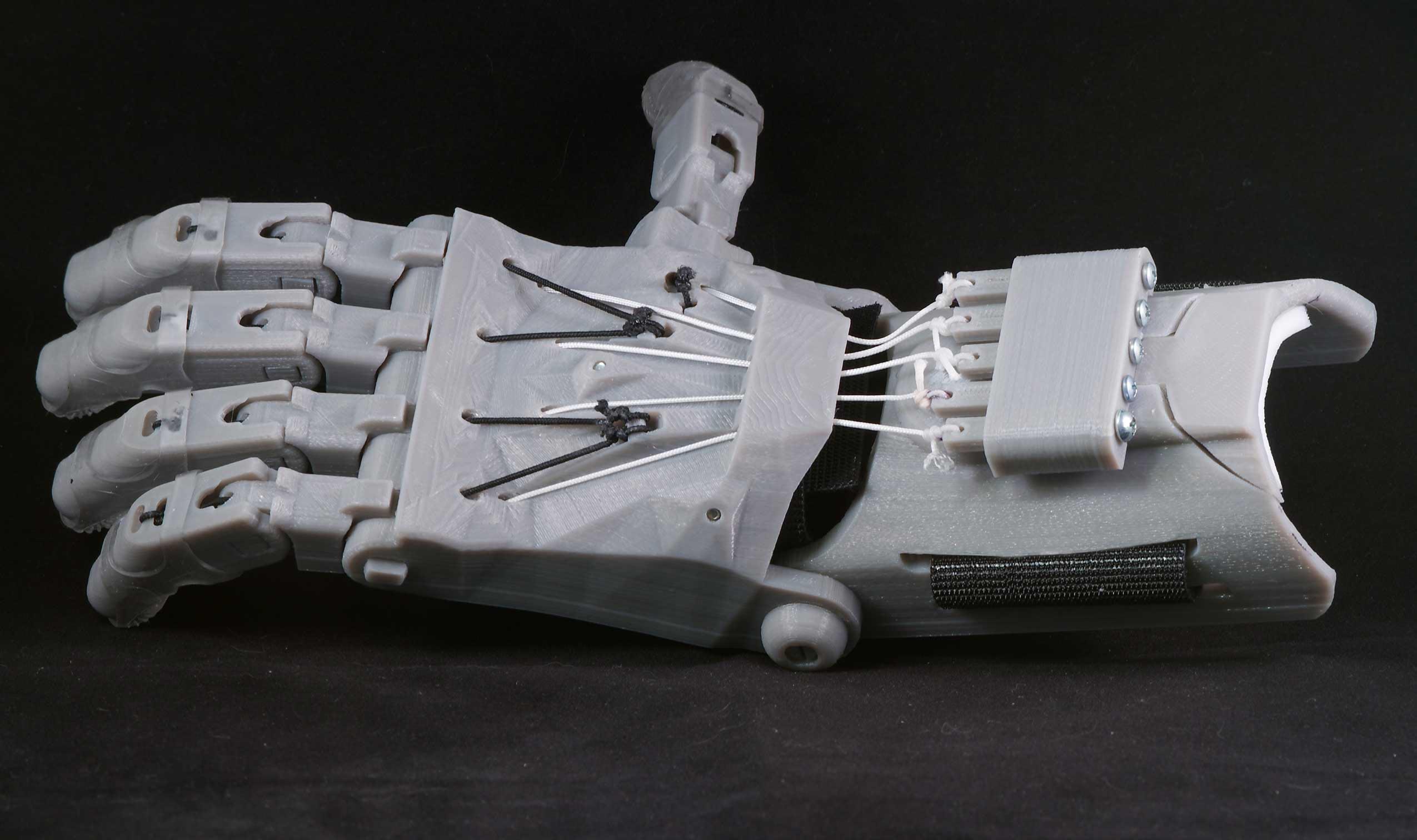
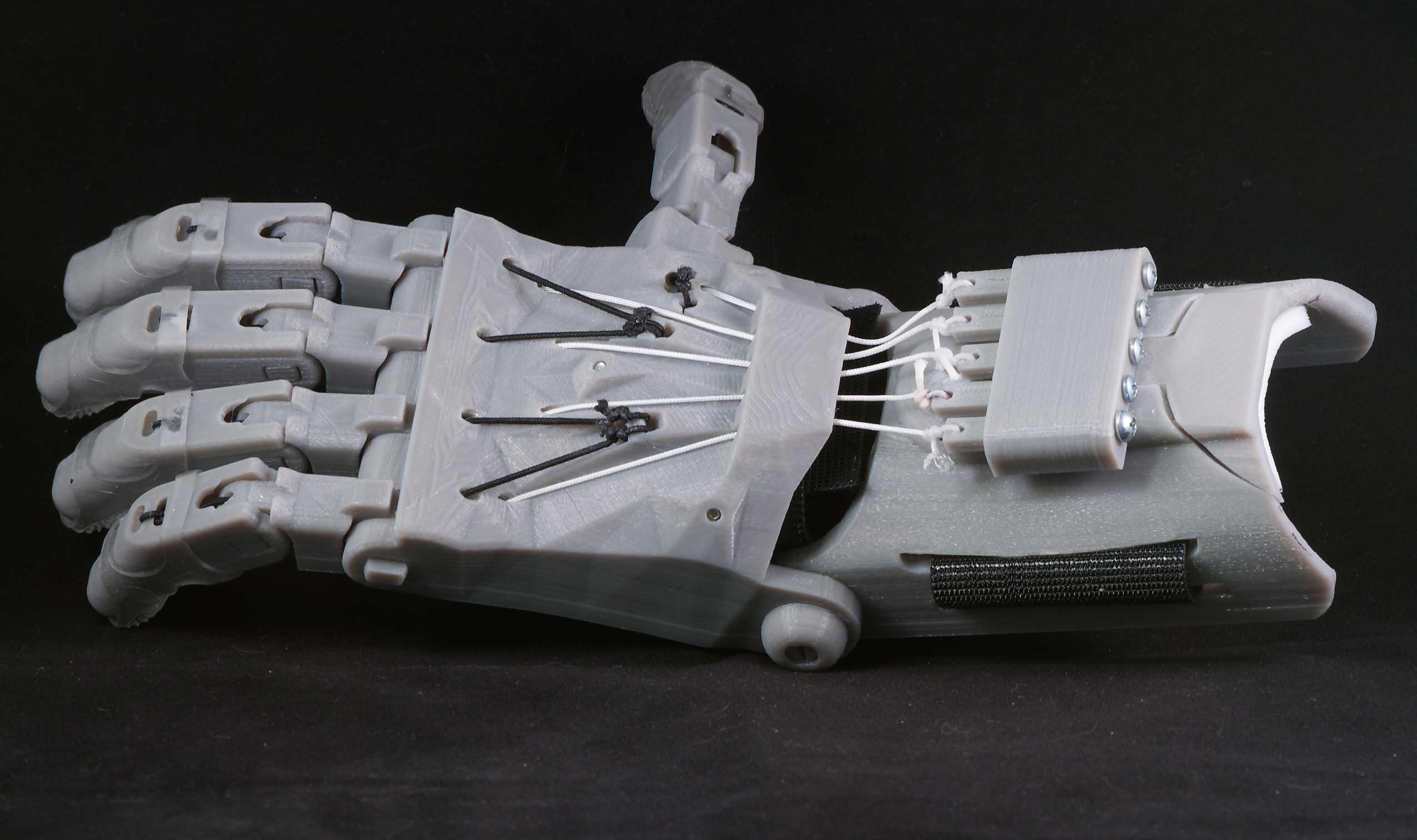
When e-Nable first started, it was with a handful of people and designs. There are now more than 5000 volunteers, and the open source design categories have now grown to 9 on the website including hand, wrist, and partial hand prosthesis, with numerous variations of each. I’d like to spotlight the ‘Raptor Hand,’ a great complete hand prosthetic design which was made in mind for ease of fabrication.

Once the Raptor design is selected as the design of choice, it is accompanied by the Handomatic web application which allows a user to input hand measurements to create custom files for 3D printing the final product. The e-Nable site provides users with a list of materials needed and links for where to get them, as well as a diagram of parts, instructions for printing, and the great instructional video below:

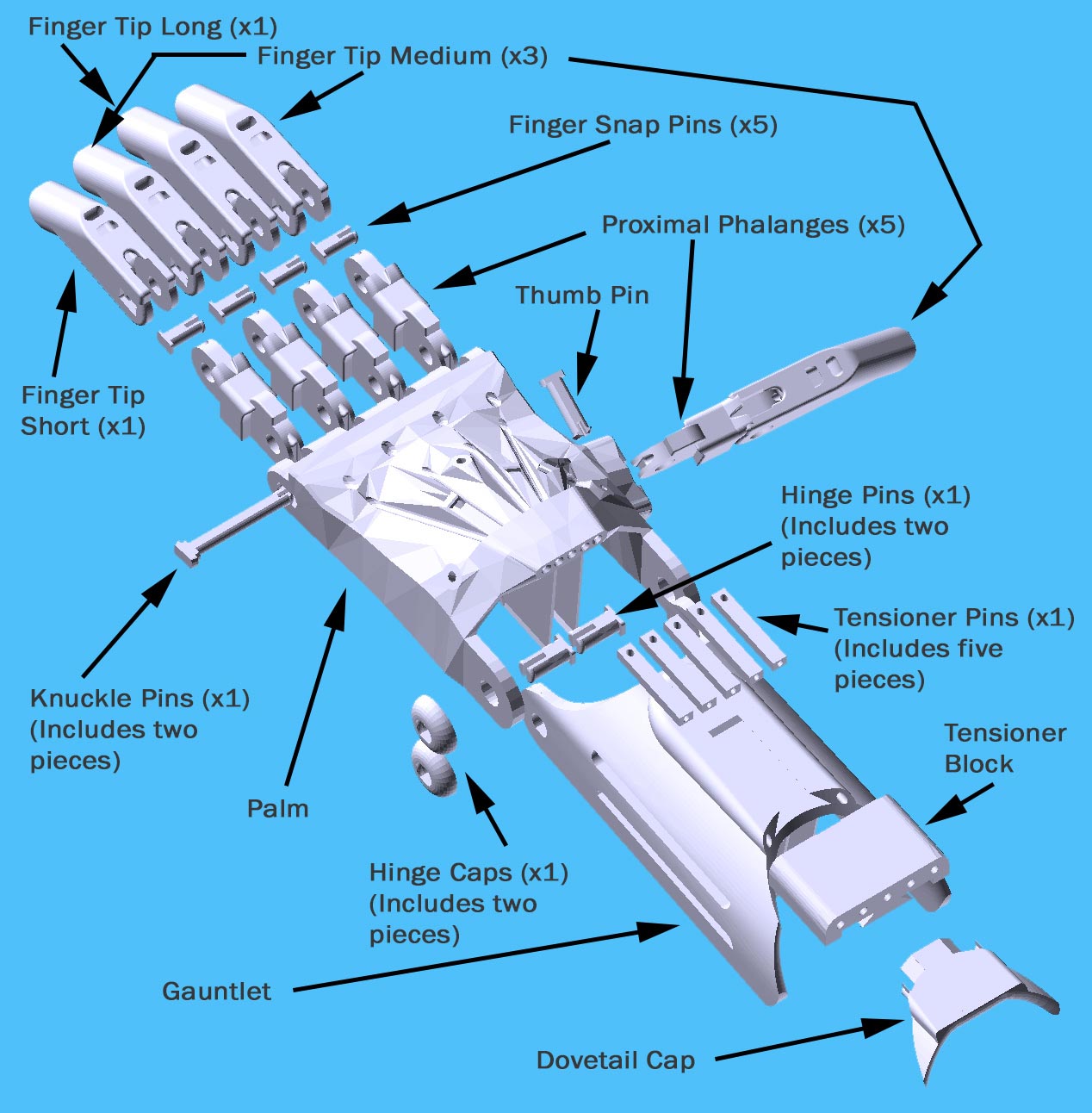
The site also provides a helpful diagram of how all the parts fit together:

Raptor Hand Parts - Exploded View

source

Raptor photo source

Above Knee

source

This post is to highlight a product which is simple, beautiful, and readily available for the general public. While we often get caught up in the glitz of newer technology, the reality is that with government rules and regulations, it is often a significant amount of time before end users have access to many newer products. If you are an amputee, for example, UNYQ has provided an immediate solution for the minimal shape and aesthetics of current prosthetics.

To lose a limb not only has high physical, but also psychological cost. Beyond the physical healing of an amputated limb are also everyday questions and glances as a reminder to the injury. UNYQ has designed numerous customized prosthetic covers to add style and dignity beyond the functionality of a lower extremity prosthesis. Customers simply go to the site, take measurements and photos of their unaffected leg, and provide some information about their current prosthesis. One of the great attributes of UNYQ is that it provides prosthetics covers for both below knee and above knee amputees.

Once the measurements are completed and design is chosen, the prosthetics covers are printed using ABS (Acrylonitrile butadiene styrene), a type of plastic material used for 3D printing. The beauty of the designs really is stunning; there are many to choose from, and the themes range from camouflage to runway with the additional option to design your own. For someone dealing with loss of limb followed by essentially a peg prosthetic replacement, these covers recover some of the physical dignity and beauty that may feel lost with the injury. One can wear jeans and fitted clothing and regain some of the symmetry lost with the amputation, or reveal the design when wearing shorts or shorter clothing.

The other great attribute of UNYQ is the relatively low cost; it can be partially reimbursable by insurance. Please visit the site for more details and to brows the designs and personal stories on the website. There are options for men, women, and children.

Above Knee

source

source

Each development in the exoskeleton industry seems more amazing and unbelievable, pushing users into a new frontier of possibility for motion. HAL (Hybrid Assistive Limb) by Cyberdyne, coined as “The world’s first cyborg-type robot,” is a thought-driven exoskeleton which provides gait assistance for its users, among other functions. Designed for both industrial use and motor relearning after neurological injury, HAL provides strength and facilitates feedback for those that need extra power with gait.

Cyberdyne explains HAL’s function from thought to movement in 7 steps. The process is initiated when the user thinks about the movement. In relearning movement after an injury, to include this thought component to the movement process is vital. In an uninjured person every voluntary movement begins in the motor cortex with thought, where the movement signal is ultimately sent to a muscle to produce movement. The way that HAL replicates this process is by attaching sensors on the wearer’s skin which receive these bio-electric signals (BES) from the brain. Upon receiving these signals, the body begins to move, causing the device to move as well, thereby assisting and adding power to human motion.

We are getting closer and closer to a device that will free those with spinal cord injuries, and other neurological injuries, from the restraint of a wheelchair. HAL is an amazing, well executed device.

Please visit the site for more information and sales inquiries. HAL has multiple variations of its product, including lumbar support for lifting and a cleaning robot.

287.png

source

It is the exoskeleton which ignited my love for robotics, a device which both mirrors and enhances human function without replacing it. As with most technology, as the robotic exoskeleton develops it is moving away from bulky and functional to sleek and precise.

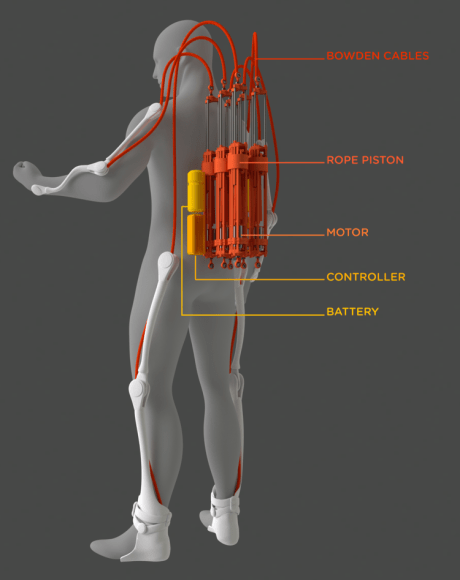
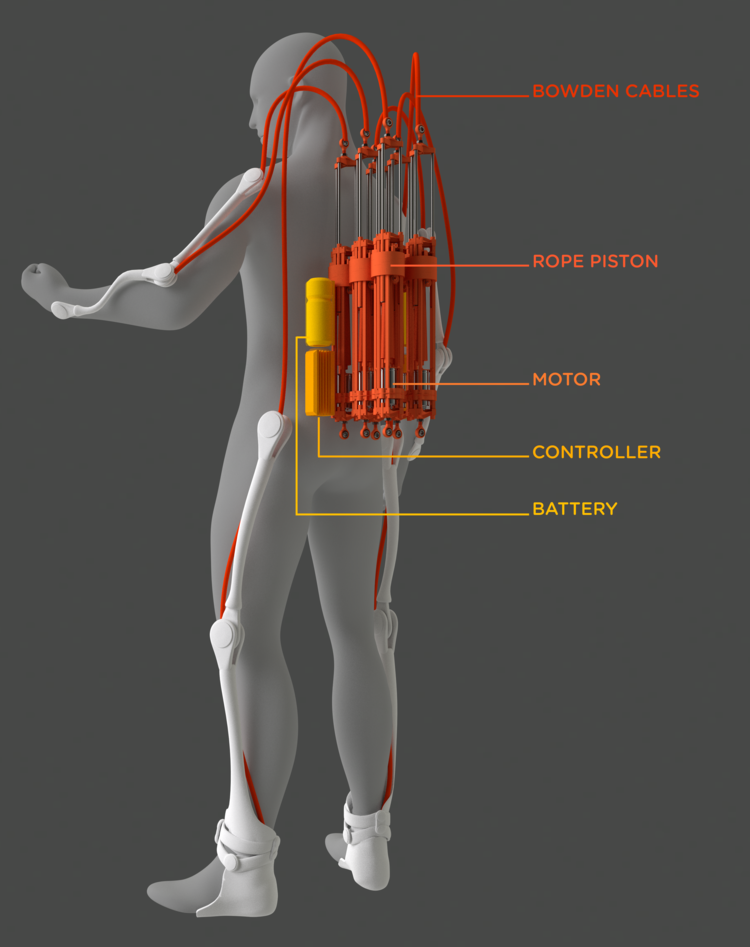
One such example of this development is the Cyclone Rope Piston by Rise Robotics. Rise Robotics has created an actuator (motor) which, paired with cables efficiently transfers power to the user. Just as a particular movement, such as holding something while bending and straightening the arm, is easier if a muscle is able to work throughout the entire range of motion, this motor helps generate power throughout the entire movement of the user. The development of such a motor potentially makes an exoskeleton much more functionally strong by generating more efficient power throughout the entire range of movement of the user.

The Cyclone Rope Piston allows for a lightweight wearable robot to assist with either strenuous activity for an able-bodied person, or movement assistance for rehabilitative purposes. This product is still in the funding phase.

For a more detailed explanation of the impressive and innovative mechanics of this system, I would recommend watching the extremely well made video below:

source

For those that have not heard of Robots for Humanity , it is a site dedicated to finding technology that allows those who are disabled to better interact with the world. Started by Henry Evans, who suffered a severe stroke that left him quadriplegic, the site features different contributors with technologies that assist and enable various activities that are otherwise difficult or near impossible for those with physical limitations.

One of these activities featured on this site is traveling. As an able bodied person, we take for granted that any new site we visit will be easy for us to negotiate, it is not so for those with disabilities. Either the travel itself, or inability of buildings to accomodate those with disabilities often makes it unreasonable for a disabled person to travel. To address this, Henry’s site features museums that allow a person to visit from their own home through a telepresence device.

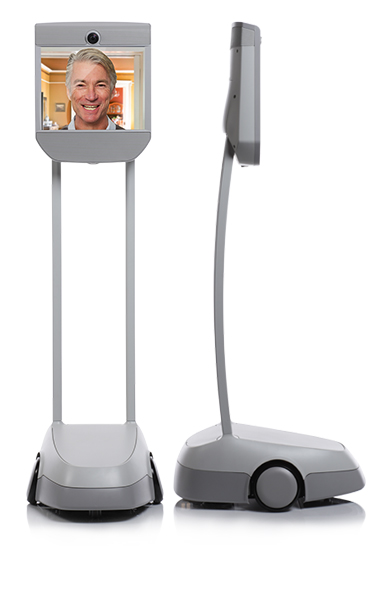
In this case the telepresence robot featured is the Suitable BeamPro, a drivable Smart Presence Device (SPD) which connects through wifi. Equipped with a dock, software client, and drivable SPD, this technology allows you to drive and communicate from any location. Driving at over 2 MPH, this device allows you to keep up with a moving subject, such as a museum guide.

The system is currently available for $1,995. See the video below for more information:

source

The retina is the eye’s camera lens, it is a vital thin layer which holds our photoreceptors, cells which receive light signals and communicate with the optic nerve to send these signals to the brain to process them as an image. With age-related macular degeneration (AMD) and other visual degenerative diseases, the productivity and sensitivity of the the retina decreases, leading to blindness. This is devastating, to lose one’s vision is to lose touch with arguably the most important sense humans have in interacting with the world.

One amazing device which can help restore vision and is slated to be ready in 2015 is the Bio-Retina by Nano Retina, a bionic retinal implant which replaces the function of an existing, nonfunctional retina. The product is a small implantable chip which attaches to the retina and is powered by its own nanoelectrodes and photosensors. Once implanted, these photosensors help to communicate with the optic nerve to restore the flow of visual information to the brain. Implanted with a procedure which takes less than 30 minutes and requires only local anasthesia, the device is said to begin working instantaneously.  It is charged with an infrared beam from the specially designed eyeglasses which accompany the implant.

The device’s cost is planned to be $60,000. See the video below for details.

UPnRIDE, ReWalk, quadriplegic, standing wheelchair, Segway

source

The trend of assistive technology is heading away from bulky, inconvenient wheelchairs that limit user’s interaction with the world. As there are different levels of injury and disability for those with spinal cord and other neurological injuries, depending on the severity some have functional use of their upper extremities but not their lower extremities, while others have limited use of their upper and lower extremities. And while there have been amazing strides for mobility with exoskeletons for those with these injuries such as the ReWalk, most new robotic assistive devices require mobility of the arms in order to support the body with assisted walking.

As necessity is the main driver for invention, the founder of the ReWalk, Amit Goffer, is in the process of developing a new product which would provide upright mobility and transfer assistance for those with injuries leaving them injured from the neck down. This product is the UPnRIDE, a standing wheelchair that moves like a Segway, and also converts to allow for sit to stand transfers. The UPnRIDE is quite amazing in its ability to negotiate uneven surfaces, slopes, turns, and allow for balance righting for safety of the user. Standing, being able to change positions, negotiating the outside environment are important not only for someone’s quality of life but also for basic health.

While the product is still in the design phase with the price goal of $25,000, it has already been funded and a prototype is in the plans to be released soon. See the video below for more information:

Silver nanowire sensors hold promise for prosthetics, robotics

source

As wearable technology progresses, monitoring activity using these devices will require more accuracy as the user interacts with the environment. From fitness trackers to prosthetics, a wearable robotic device is extremely useful if its user is able to interact and gain feedback from its use. At North Carolina State University, researchers developed a silver-based nanowire sensor to monitor changes in pressure, finger touch, strain, and bioelectronic changes. As described in the study, the sensor involves a material placed between two conductors. The silver wires are the conductors, while the material in the middle is Ecoflex silicone and serves as the electric insulator. These sensors are moveable, stretchable, and respond to pressure changes in real time, within 40 milliseconds. Between these two layers an electric charge is stored, and as the sensor is stretched or deformed in any way, this change is interpreted as energy and measured.

The movements which these sensors are able to detect are walking, running, and jumping from squatting. For use in robotics devices such as exoskeletons and prosthetics, this information will become invaluable as the user will need this information in order to interact with the environment for safety and feedback purposes. The sensors can be used to ‘feel’ the environment, as well as to monitor movement and activity. For those with robotic prosthetic devices, these sensors can be used to provide important feedback to retrain the body and provide kinesthetic feedback.

One of the unique attributes of these sensors is their ability to deform and change shape with movement, as they can stretch up to 150% of their original shape.

source

Termed, a ‘collaborative robot’ and starting its commercialization phase, C-Bot from Spain-based FisioBot is designed as an automated physical therapy room which includes are two robotic arms designed to administer treatment. The C-Bot is designed so far mostly for simple procedures and modalities: vacuum (suction) therapy, hot air therapy, electrotherapy, and laser therapy. These treatments can be adjusted for depth and intensity, and the robot is deemed safe for human use as there is a limit of how much physical pressure it can apply.

For use, A 3D scan of the patient’s body is performed, giving each patient an identification card of a map of their body. The treatment of choice is then administered, with the possibility of simultaneous treatments.

As robotics grows in healthcare, the implications of the C-Bot for PT are interesting, and it seems a short matter of time before robots are assisting in more involved procedures during manual therapy.

See the videos below for a demonstration (video in Spanish), and an automated video.

source

Humans are visual creatures. Of all our senses we largely rely on sight, our cues for survival rely on it and much of our brain tissue is dedicated to the process. And while all prosthetics are complex, as recreating normal physiology is extremely difficult, the eye is something else. In order for us to view an image, signals are detected from the environment in our eyes, sent along via a nerve and then flipped and processed in the brain to form an image for us to view. This is happening constantly as we move our eyes. When there is an injury that obstructs this process, blindness occurs.

A developing category of prostheses called neuroprosthetics is finding a way to complement nervous system dysfunction and become the link between the brain, nerves, and the rest of the body. Within this category, bionic eyes are being developed to supplement neural injury leading to blindness. One such example is the development of bionic vision system from Monash Vision Group called the Gennaris.

Targeted for those with blindness or a severe visual impairment, Gennaris is a two part system of headwear with a camera and an implantable brain chip. While normally we rely on the retina in our eyes to receive images and then send signals to the brain via the optic nerve, Gennaris plans to bypass this process and send the signal straight to the brain from its camera into an implanted brain chip, which will then stimulate the visual cortex of the brain which processes images. This involves some retraining of the brain to adapt to this system, but for those that currently live in the dark this offers much hope.

The Monash Vision Group is still seeking funding to continue to develop this project for release in 2015, please contact them if you would like to contribute.